%201.png)

We challenge norms, push boundaries and redefinepossibilities. Join us to facilitate a pain free, activelifestyle and achieve peak performance.


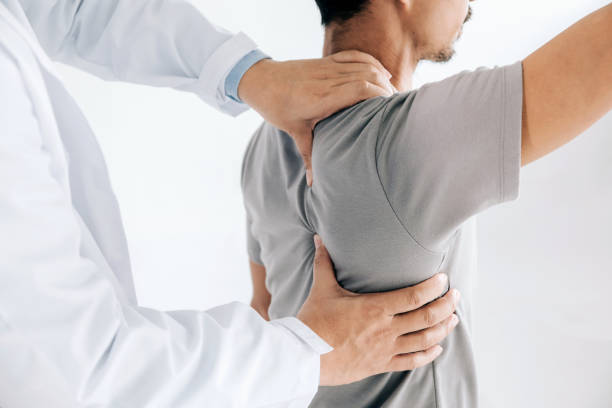
Pain and restricted movement are problems that most people try to manage rather than resolve. They stretch the tight areas, rest the painful ones, take anti-inflammatories when it gets bad enough, and hope that things eventually settle down on their own. Sometimes they do. But for a significant portion of musculoskeletal conditions — particularly those involving joint stiffness, muscle tension, soft tissue adhesions, and trigger point activity — passive management simply doesn't address the underlying problem. That's where manual therapy comes in.
Manual therapy at Guerrilla Performance & Recovery is a hands-on restorative service specifically designed to alleviate pain, stimulate healing, manage training-related soreness, and address the musculoskeletal imbalances that drive dysfunction and discomfort. It's one of the most direct and effective clinical tools available for people dealing with pain that hasn't responded to other approaches — and it's delivered by skilled therapists who understand how to apply it correctly within the context of a broader performance and recovery program.
What Manual Therapy Is and How It Works
Manual therapy is a broad category of clinical techniques in which a trained therapist uses their hands to assess and treat the joints, muscles, connective tissue, and fascial structures of the body. The techniques vary depending on the specific tissue being targeted and the goal of the intervention, but they share a common purpose: restoring normal mobility, reducing pain, and improving the mechanical function of the musculoskeletal system.
At Guerrilla Performance & Recovery, manual therapy encompasses four core components — skilled assessment, joint mobilization and manipulation, soft tissue mobilization, and dry needling. Each of these addresses a different aspect of musculoskeletal dysfunction, and they are frequently combined within a single treatment session to produce outcomes that none of them could achieve as effectively in isolation.
Skilled Assessment
Every manual therapy session at Guerrilla begins with skilled assessment. Before any hands-on treatment is applied, the therapist uses careful palpation and movement analysis to identify the specific source of your pain and dysfunction. This assessment is what separates effective manual therapy from generic massage or manipulation — it ensures that every technique applied is targeted to the actual structure causing the problem rather than applied generically to the symptomatic area.
Palpation allows the therapist to feel for joint stiffness, muscle tension, trigger points, soft tissue restrictions, and areas of inflammation or tissue thickening that indicate active pathology. Movement analysis identifies the specific positions and patterns that reproduce your symptoms and reveals the mechanical factors — poor joint mobility, altered movement patterns, muscle imbalances — that are contributing to them. This assessment informs every decision made during the treatment session and is repeated throughout the session to evaluate the tissue's response to each intervention.
Joint Mobilization and Manipulation
Joint mobilization and manipulation are hands-on techniques that restore proper joint mechanics by applying graded forces to the joint in specific directions and at specific velocities. When a joint loses its normal range of motion — due to injury, inflammation, post-surgical scarring, or the cumulative effects of repetitive loading — the cartilage, ligaments, and joint capsule that surround it develop restrictions that prevent full, pain-free movement.
Joint mobilization uses gentle, oscillatory movements applied progressively to the joint at varying grades of force and amplitude depending on the degree of restriction and the irritability of the tissue. It's a precise technique that gradually restores the joint's normal accessory motion — the small gliding, rolling, and spinning movements that occur within the joint during functional movement and that are essential for pain-free range of motion.
Joint manipulation involves a higher-velocity, lower-amplitude thrust at a specific point in the joint's range of motion. The audible pop that often accompanies joint manipulation is the release of gas dissolved in the synovial fluid — not, as commonly believed, bones cracking. The therapeutic effect of manipulation includes immediate improvements in range of motion, reduction in pain, and changes in the neurological activity of the surrounding musculature that can reduce muscle guarding and improve movement quality.
These techniques are particularly effective for cervical and lumbar stiffness, shoulder mobility restrictions, hip capsule tightness, and thoracic mobility limitations that contribute to a wide range of upper and lower body pain presentations.
Soft Tissue Mobilization
Soft tissue mobilization at Guerrilla Performance & Recovery addresses the muscles, tendons, ligaments, and fascial structures that accumulate tension, adhesions, and restrictions from training, injury, poor posture, and repetitive movement patterns. The techniques used include massage, myofascial release, and trigger point therapy — each targeting different aspects of soft tissue dysfunction.
Therapeutic massage works on the superficial and deeper layers of musculature to reduce tension, improve circulation, and decrease the post-training soreness that accumulates with consistent high-load training. Myofascial release addresses the fascial system — the connective tissue network that envelops every muscle and structure in the body — by applying sustained, low-load pressure to areas of fascial restriction and allowing the tissue to release and lengthen over time.
Trigger point therapy directly targets the hyperirritable spots within taut bands of muscle fiber that produce local pain and referred pain patterns throughout the body. Active trigger points can cause pain that's felt far from their actual location — a trigger point in the upper trapezius can cause headaches, a trigger point in the glute can mimic sciatic pain down the leg. Trigger point therapy uses sustained compression, contract-relax techniques, and dry needling to release these points and resolve the pain patterns they generate.
Dry Needling Within Manual Therapy
Dry needling is incorporated into the manual therapy program at Guerrilla as a targeted tool for releasing trigger points and deep tissue restrictions that are difficult to access effectively through surface-level manual techniques alone. Thin filiform needles are inserted into specific trigger points or tight muscle bands to release tension, reduce pain, and improve neuromuscular function in the treated area. It's applied as part of the overall manual therapy plan — not as a standalone treatment — and is coordinated with the joint mobilization and soft tissue work to produce comprehensive improvements in both tissue quality and joint mechanics.
Who Manual Therapy Is Appropriate For
Manual therapy at Guerrilla Performance & Recovery is appropriate for a wide range of presentations. People dealing with acute injuries who need hands-on treatment to manage inflammation, restore mobility, and prevent compensatory patterns from developing benefit from early manual therapy as part of their rehabilitation plan. People managing chronic pain — whether from old injuries, degenerative conditions, or the cumulative effects of years of training or physically demanding work — benefit from the root-cause approach to tissue and joint dysfunction that manual therapy provides.
Athletes who use manual therapy proactively between training sessions maintain better tissue quality, recover more quickly between hard sessions, and reduce the risk of the overuse injuries that derail training blocks. And people who have recently had surgery benefit from manual therapy in the post-operative period to manage scar tissue, reduce muscle guarding, and restore mobility to the surgical area.

We challenge norms, push boundaries and redefinepossibilities. Join us to facilitate a pain free, activelifestyle and achieve peak performance.