%201.png)

We challenge norms, push boundaries and redefinepossibilities. Join us to facilitate a pain free, activelifestyle and achieve peak performance.


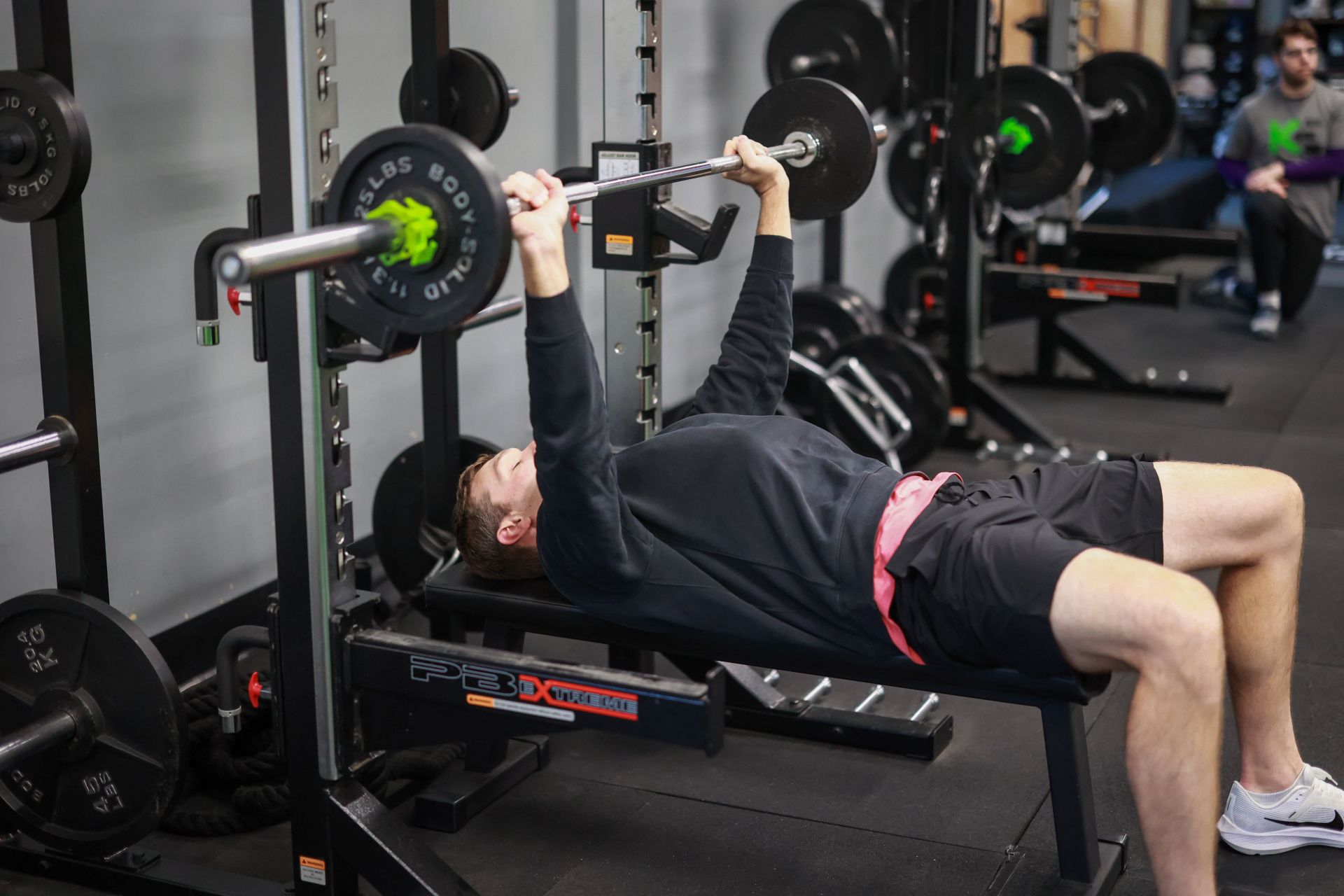
Strength is the physical quality that underlies every other aspect of athletic performance. Speed, power, agility, injury resilience — all of these are built on a foundation of strength. An athlete who is genuinely strong relative to their body weight accelerates faster, decelerates more safely, changes direction more explosively, and absorbs impact from contact and landing forces far more effectively than one who isn't. And yet strength training remains one of the most poorly executed components of most athletes' programs — either neglected entirely, approached with no real structure, or conflated with bodybuilding in a way that doesn't translate to sport.
At Guerrilla Performance & Recovery, strength training for athletes is a specific discipline — not just lifting weights, but developing the type of strength that directly improves what athletes do in competition.
Why Strength Training Is the Foundation of Sports Performance
The case for strength training in athletic development is well established. Stronger athletes are faster because force production capacity is a primary determinant of acceleration. Stronger athletes are more powerful because power — the ability to produce force quickly — is limited by the underlying strength base. Stronger athletes are more durable because adequate strength in the muscles, tendons, and connective tissue is the primary protective mechanism against the loading forces that cause injury during sport.
The sports performance program at Guerrilla Performance & Recovery builds strength through a training model that prioritizes functional, sport-applicable force production rather than isolated muscle development. The exercises, loading patterns, and movement velocities used in the program are selected based on their relevance to the movement demands of your sport — not based on what's popular in recreational fitness circles.
How Strength Is Developed at Guerrilla
Assessment First
Before any strength programming begins, the Guerrilla coaching staff completes a thorough assessment of your current strength baseline. This includes functional movement screening, sport-specific strength testing, and an evaluation of any movement limitations or asymmetries that need to be addressed before heavier loading is introduced. This assessment is what makes the program specific to you rather than generic — and it's what allows the coaching team to manage loading safely while still pushing you to develop real strength.
Progressive Overload With Purpose
Strength develops through progressive overload — the systematic increase of the training stimulus over time. At Guerrilla, this progression is managed deliberately across training phases that build on each other. Early phases focus on establishing movement quality and neuromuscular efficiency. Later phases introduce higher loads and more sport-specific movement patterns. The program is structured so that each block of training prepares you for the demands of the next, producing consistent, compounding strength gains rather than the plateau that comes from repeating the same workouts indefinitely.
Compound Movements and Sport-Specific Patterns
The strength training at Guerrilla emphasizes compound movements — squats, deadlifts, hinges, presses, rows, and loaded carries — that develop total-body strength and train the neuromuscular coordination that athletic movement demands. These movements are modified and progressed based on your sport's specific demands and your individual movement profile. A football lineman and a track sprinter both need to be strong, but the expression of that strength and the movement patterns most relevant to developing it are different — and the program reflects that.
Strength Training and Injury Prevention
One of the most compelling reasons for athletes to invest in structured strength training is injury prevention. The research on this is consistent: athletes who participate in well-designed strength training programs have significantly lower rates of both acute traumatic injuries and overuse injuries compared to those who don't.
At Guerrilla Performance & Recovery, the integration of physical therapy and strength training under one roof means that injury prevention is actively managed rather than hoped for. Movement dysfunctions that predispose athletes to injury are identified in assessment and addressed in programming. Load management is monitored to prevent overtraining. And if an issue does develop, the physical therapy team is immediately available to address it before it becomes a full injury that interrupts training.
Who This Program Is Built For
The strength training component of the Guerrilla sports performance program is appropriate for high school athletes building their physical foundation for college recruitment, college and professional athletes looking to reach new levels of strength and power output, adult recreational and masters-level athletes who want to perform better and stay healthy in the sports they love, and general fitness clients who understand that strength is the most important physical quality to develop regardless of their specific goals.

We challenge norms, push boundaries and redefinepossibilities. Join us to facilitate a pain free, activelifestyle and achieve peak performance.